
April 28, 2024
To fill or not to fill? The keys to knowing when it’s time to visit your Aesthetic Doctor.
Categories:
Cosmetics & Dermatology
It’s Tuesday morning, you’re in another Zoom meeting and suddenly you notice those lines next to your mouth, that weren’t there before.
Lines that are deep, lines that stay there even when your face is rested, lines that you remember your mom and aunties having when you were little. The nasolabial fold lines.
So you ask yourself, to fill or not to fill? Well, let’s start with the basics- how do we age? What is filler? How can it assist the aging process? What are its alternatives?
The aging process
With life span and health expectancy on the rise, we live in a privileged time of being able to age. Aging is an insidious process, caused by a multitude of factors relating to decreased collagen and elastin production in the skin, atrophying (shrinking) muscles, skeletal regression and fat pad repositioning.
In their groundbreaking, evidence based article on aging, swift et al (https://pubmed.ncbi.nlm.nih.gov/33325497/) approach facial aging according to the various layers of the face.
These are:
- Bone changes
- Soft tissue changes (fat pads and muscle)
- Skin changes
Changes in each of these layers don’t occur in isolation but in correlation and continuum- each layer depending on the other, each undergoing an aging process, which ultimately leads to what can be seen with the eye.
Which leads us back to our Zoom call dilemma- to fill or not to fill?
What is Filler exactly?
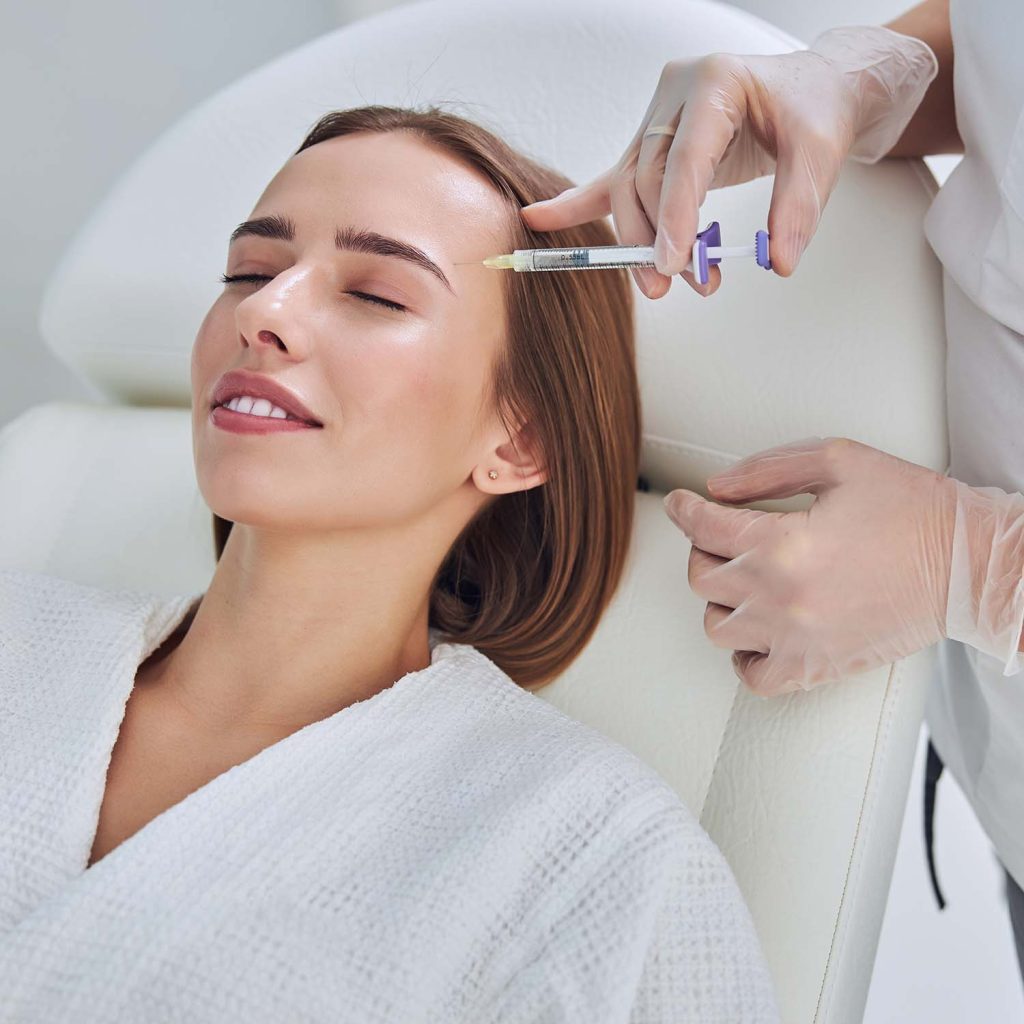
Filler is a colourless, gel-like substance comprised of highly cross linked hyaluronic acid. It is used to plump the skin, fill wrinkles and provide facial fullness associated with youth.
Fillers come in various densities, for various purposes. For example, in lip augmentation (beautification) a low density, soft filler is used for good tissue integration and to avoid lumps, whereas for structure in the mid face eg cheekbones, a high density filler is placed as a scaffold for overlying skin and other soft tissues.
In terms of the aging process, it can be used to provide structure for overlying skin, and fat pads in strategic positions in the mid face eg cheek bones, temples. It can be used to provide symmetry and profile balancing eg jaw line, chin, and even the nose. Or it can be used to fill wrinkles such as the nasolabial folds and chin crease.
Depending on the filler used (I like Allergan’s Juvederm range for facial structuring and volumisation, and Restylane’s kysse for luscious lips), they last anywhere between 9-24 months. Areas with a low density filler, and lots of movement will have a shorter life span eg the lips, whereas areas requiring a high density product and with very little movement such as the temples, will tend to last longer.
For the nasolabial folds, a mid-density filler is used, but chasing these lines isn’t an ideal nor holistic treatment plan. The face is a whole, and if we are to age gracefully, all of the aging factors mentioned above must be treated and considered in a 3D approach. Let’s work our way outside in.
Skin health
Good skin quality is not an overnight event, nor exists there a single solution for flawless skin. However, there are a few basics that, when consistently applied, can give you that healthy, youthful glow. These are outlined below:
1. Stay hydrated- you’ve heard it, read it and known it for so long. Now just do it. 30mL/kg per day on an average day. If it’s hotter or you’re exercising, add on 500mL.
2. Drink collagen- from the age of 25 onwards, our body does not produce enough collagen to meet the demand. Our skin is made up mostly of collagen fibres, and so to age gracefully, simply supplement.
3. Use sunscreen- please? No matter what your skin type or tone, from Scandinavian pale white, to Nigerian dark skin, every tone can benefit from daily, repeated use of SPF 50, or more. One that prohibits UVA, UVB and visible light is key. Photo damage by these light sources is one of the leading exacerbators of premature aging. My personal favorite brands are Isdin and Heliocare. Both have a great texture, don’t leave a white residue and don’t leave the skin oily.
4. Invest in good products- there’s a saying in Afrikaans that I love, “goedkoop is duur koop” which can be loosely translated as, “cheap purchases are actually expensive “. I 100% stand by this, especially for skin health. When you try take shortcuts or price cuts, the expectation is never met and you end up buying the more expensive product later, anyways. We are fortunate to have exceptional, South African medical grade skin care solutions, in practice and online. The initial cost should be seen as an investment into your skin, that will help your Botox, fillers, peels etc look better and last longer. And no, dove soap doesn’t fall into this category, so stop using it.
There are a multitude of in-clinic therapies that can be employed to assist with improving skin quality, texture and tone. These include but are not limited to mesotherapy, micro-needling, chemical peels, Biostimulators (e.g. profilho), PRP facial (vampire facial), fractional laser (Nd:YAG), and Carboxytherapy.
Soft tissue
Overly strong muscles cause dynamic wrinkles. A prime example that is universal, is the frown. It looks good on no one and only makes one appear sad, mad, bad or tired. It’s one of the first areas we tackle in aging and is best treated with botulinum toxin (Botox). This causes a non-permanent muscle relaxation and an inability to frown. Voila.
Other commonly treated areas include the forehead lines, crows feet (peri-orbital lines), bunny lines of the nose, gummy smile and the chin. Botox can also be used as an alternative to filler in the lips, as a lip flip. This specialized technique helps the lips to turn out, without a drop of filler, resulting in a totally natural, ‘untouched’ but full look.
The various fat pads that shift, atrophy or hypertrophy require a little bit more invasive procedures such as dermal filler, fat transfer and threads. These techniques are used to reposition fat pads to their Once youthful position. As for the boney elements, a high G prime filler is definitely the answer, or plastic surgery implants (eg for chin Augmentation).
To fill, or not to fill?
Taking all of the above into consideration, my best recommendation would be to start with the basics of skin health. Consistent application produces consistent and significant results.
Fortunately, aesthetic medicine is very personalized medicine and there is not a, “one-size fits all”. Whether you decide to fill or not fill, make sure you find a good, certified aesthetic doctor, build a trusting relationship with them and, consistently apply the basics. Future you will thank you.
About Us
Medical Doctor Specialising in Medical Aesthetics